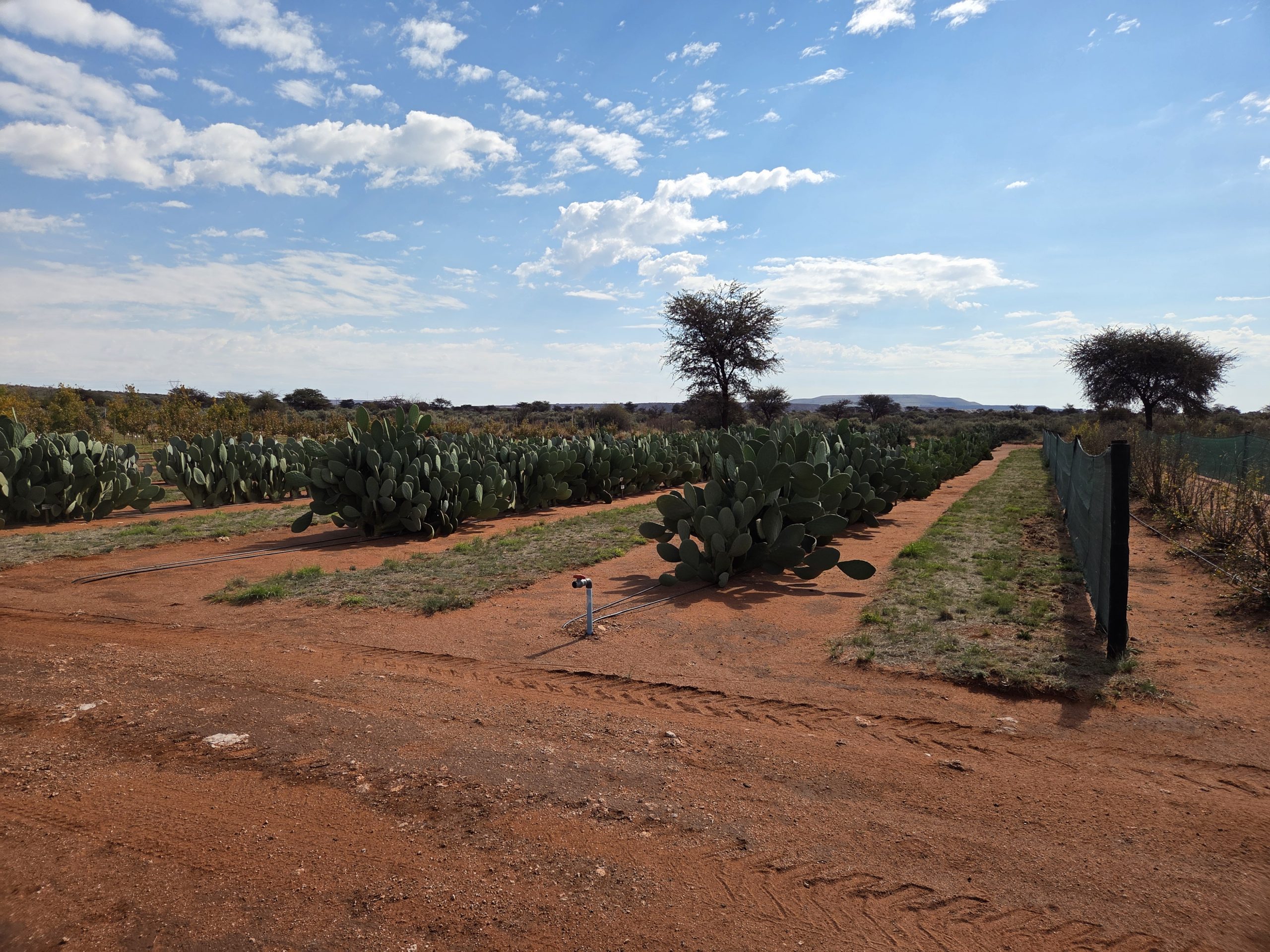
OPUS Cactus Establishes First European Opuntia Nursery in Tuscany with Tenuta di Paganico
Just before the heat of the Italian summer, OPUS Cactus reached an important milestone in its European development: the completion of our first Opuntia nursery in mainland Europe, located at Tenuta di Paganico in Tuscany, Italy.
This nursery represents our first physical step into cactus cultivation in mainland Europe and marks the beginning of a strategic collaboration focused on demonstrating how Opuntia-based systems can contribute to land restoration, livestock resilience, biomass production, and climate-positive agriculture under Mediterranean conditions.
A strategic partnership rooted in regenerative agriculture
OPUS Cactus has partnered with Tenuta di Paganico, a certified organic agro-silvopastoral estate in the Tuscan Maremma, to establish a field-scale demonstration platform for sustainable Opuntia cultivation.
By signing the Memorandum of Understanding (MOU), the partnership brings together two highly complementary areas of expertise.
OPUS Cactus contributes proven experience in sustainable Opuntia cultivation systems, research methodology, and biomass valorization technologies developed through our operations in South Africa and our R&D activities at the Zernike Campus in Groningen, the Netherlands.
Tenuta di Paganico provides an ideal European demonstration environment: a certified organic farm with established livestock systems, including Maremmana cattle and Cinta Senese pigs, degraded and marginal land suitable for restoration, and a strong commitment to environmental sustainability, biodiversity, and farm-to-fork value chains.
Together, the partnership creates a unique opportunity to showcase a commercially viable Opuntia management system that can be adapted to Mediterranean semi-arid conditions, while addressing key agricultural and climate challenges such as feed security, land degradation, drought resilience, and carbon sequestration.
Why Opuntia in Tuscany?
Mediterranean agriculture is increasingly exposed to climate stress, including longer dry periods, higher temperatures, soil degradation, and pressure on conventional forage systems. In this context, Opuntia offers a promising complementary crop.
As a drought-tolerant cactus species, Opuntia can be cultivated on marginal or degraded land where many conventional crops struggle. It can produce significant biomass with comparatively low water requirements and offers multiple potential applications, including livestock supplementation, fruit and cladode-based food products, biomass valorization, and ecosystem restoration.
At Tenuta di Paganico, the new nursery will support practical research into how Opuntia can be integrated into existing organic livestock and agroforestry systems. The work will focus not only on plant growth and biomass production, but also on the wider value chain: animal nutrition, soil improvement, product development, carbon monitoring, and farm economics.
Key collaboration areas
1. Degraded land restoration and biomass production
One of the primary objectives is to establish high-density Opuntia plantations on non-productive or marginal land unsuitable for conventional cropping.
The demonstration will assess how Opuntia can contribute to biomass production for livestock supplementation, particularly during dry periods when feed availability is often constrained. At the same time, the project will study the plant’s role in improving soil structure, supporting organic matter accumulation, reducing erosion, and helping restore degraded land.
This is central to OPUS Cactus’ broader mission: transforming marginal and semi-arid land into productive, resilient, and ecologically valuable landscapes.
2. Integration into silvopastoral livestock systems
A major focus of the partnership is the integration of Opuntia into Tenuta di Paganico’s existing woodland-pasture rotations.
The project will evaluate how Opuntia can complement current grazing systems and support livestock during seasonal feed gaps. Research will include animal performance, palatability, feeding behavior, and the development of practical feeding protocols for cattle and swine.
This work is particularly relevant for Italian and Mediterranean livestock operations seeking resilient feed strategies in the face of increasing climate variability.
3. Farm-to-fork product development
Beyond biomass and feed, the collaboration will explore value-added opportunities from Opuntia fruit and cladodes.
Tenuta di Paganico’s existing farm-to-fork approach, organic certification, product portfolio, and distribution channels create a strong platform for developing cactus-derived products. Potential areas include food products, preserves, nutraceutical applications, and other value-added outputs that support farm revenue diversification.
This aligns closely with OPUS Cactus’ wider biorefinery vision: using Opuntia as a versatile biomass platform capable of supporting multiple product streams.
4. Carbon sequestration and ecosystem monitoring
The project will also establish baseline and ongoing monitoring of carbon capture in Opuntia-based systems compared with degraded land controls.
This includes measuring soil organic matter, biodiversity indicators, water retention, and broader ecosystem service improvements. These data points are essential for demonstrating the climate-positive potential of Opuntia systems and for future participation in emerging carbon credit and climate accounting frameworks.
Research value and expected outputs
The Tuscany nursery and demonstration site will generate important field-scale data for European and Mediterranean agriculture.
Expected research outputs include:
- Cultivar performance data under Tuscan Maremma climatic conditions
- Biomass production benchmarks for Mediterranean semi-arid environments
- Integration protocols for Opuntia in certified organic livestock operations
- Animal nutrition and welfare metrics with cactus supplementation
- Soil health improvement trajectories on degraded land
- Water-use efficiency comparisons across intercropping configurations
- Economic feasibility models for Italian farm adoption
- Carbon sequestration data for climate accounting frameworks
The results will support peer-reviewed publications, farm advisory materials, and practical replication protocols for regional agricultural extension services and future partners.
A first step toward European Opuntia cultivation at scale
For OPUS Cactus, the completion of the nursery at Tenuta di Paganico is more than a new field site. It is the beginning of a European demonstration pathway for Opuntia-based regenerative agriculture.
By combining OPUS Cactus’ research and biomass expertise with Tenuta di Paganico’s certified organic livestock systems and strong sustainability platform, this partnership will help demonstrate how cactus cultivation can contribute to resilient food systems, productive land restoration, and climate-positive farming in Mediterranean Europe.
We look forward to sharing further updates as the nursery develops and the first research results begin to emerge.