Press Release | OPUS Cactus Demonstrates South Africa’s First Cactus-to-Biogas Breakthrough
Turning Semi-Arid Marginal Land Into a New Source of Clean Energy, and Rural Economic Opportunity, Offering a Solution to South Africa’s upcoming Gas Cliff.
BLOEMFONTEIN, South Africa – November 18, 2025
OPUS Cactus ® – a Dutch bio-technology company with main operations in South Africa – has announced a significant breakthrough in renewable energy; the first confirmed continuous production of biogas from the biomass of the spineless varieties of the Opuntia – commonly known as the cactus pear, nopal or prickly pear – in South Africa. This initiative positions the resilient plant as a powerful solution to global energy and environmental challenges without competing with arable land.
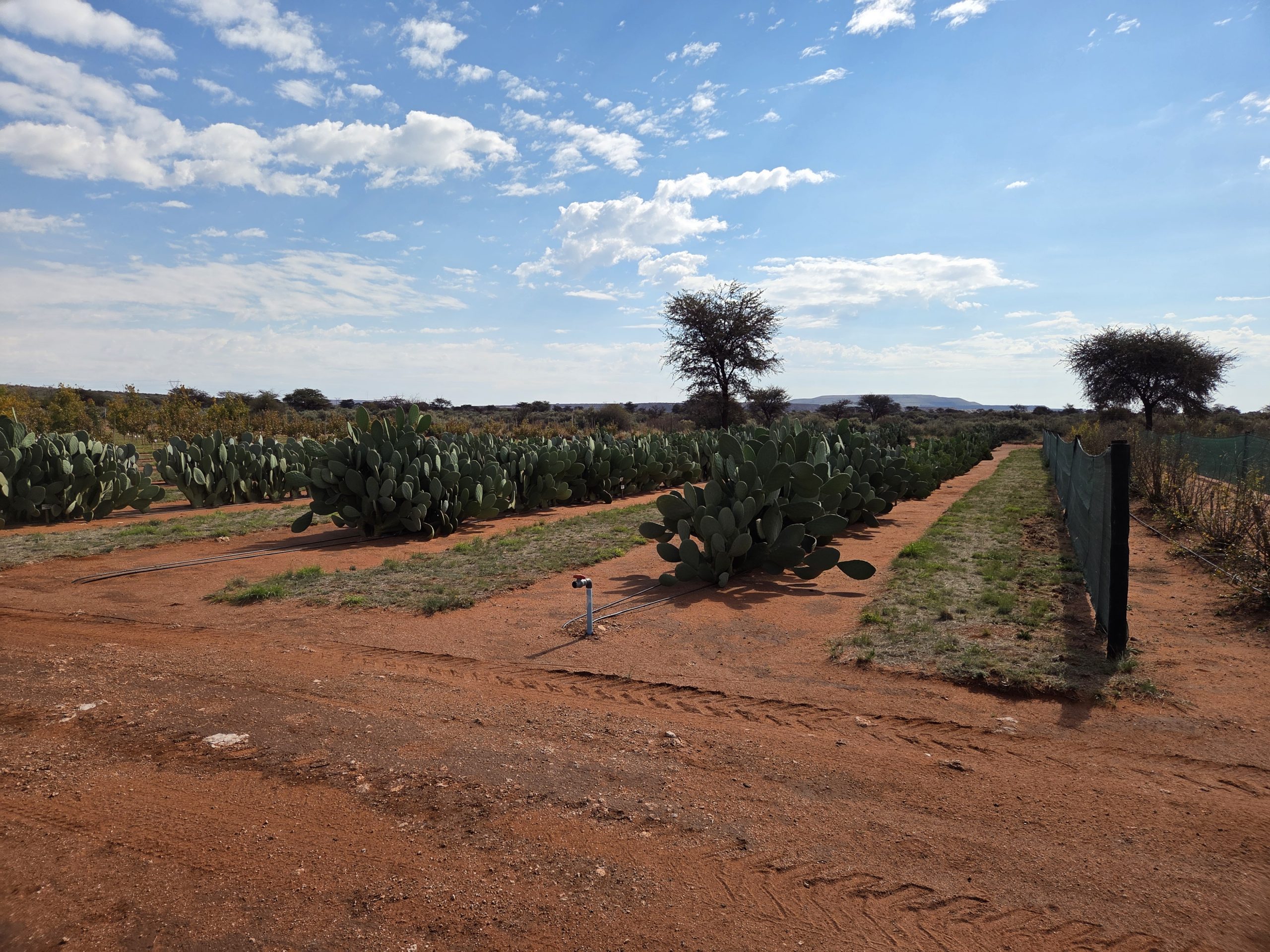
The company’s main agricultural operations hub, located at the Waterkloof Research Centre 30 km outside Bloemfontein South Africa, more than 200 hectares of spineless Opuntia under cultivation as part of a broader 1,000-hectare development footprint. In collaboration with the University of the Free State (UFS), the leading academic institution on Opuntia varietal knowledge in South Africa, OPUS Cactus ® is demonstrating the plant’s potential beyond traditional agriculture using marginal land and regenerative farming techniques. The opuntia cactus thrives in semi-arid landscapes, requiring minimal water (thriving on as little as 250 mm of annual rainfall with no irrigation), making it an ideal candidate for cultivation on marginal lands.
OPUS Cactus ® has confirmed that the plant is not only a viable biofuel feedstock but also an effective carbon capture agent, absorbing high levels of CO2 in marginal and disturbed landscapes, including areas affected by historical mining.
High-Yield Energy Potential
Once cultivated, the cactus biomass is harvested, macerated, and fed into an anaerobic digester, where it is converted into biogas containing 50–60% methane. OPUS Cactus ®’s research confirms the plant’s remarkable energy potential. A single mature cladode (1kg) can yield up to 60 litres of biogas, while each hectare of semi-arid land can generate enough renewable energy to supply 20 South African households per year, depending on conversion efficiency.
The resulting biogas can be upgraded into pipeline-quality biomethane or used to generate renewable electricity. The nutrient-rich digestate left after anaerobic digestion is returned to the fields as an organic fertilizer, creating a circular nutrient loop that supports regenerative farming practices. In parallel, OPUS Cactus ® is advancing research into additional value chains (animal feed, human food ingredients, cosmetics, nutraceuticals, and emerging bio-materials) unlocking the full biorefinery potential of the Opuntia plant.
“We are excited about the near future, as we plan to reach financial close on the first commercial-scale projects in South Africa by the first half of 2026,” said Joeri van den Bovenkamp-Hofman, CEO of the OPUS Cactus International.” This plant tackles energy poverty, water scarcity, and climate change all at once. Alongside our South African projects, we also intend to expand into new territories with opuntia nurseries in Namibia, Oman and into the EU, specifically Italy, Greece and Spain.”
On Saturday, 8th November 2025, the OPUS Cactus team marked a key project milestone by successfully utilizing their biogas produced entirely from Opuntia cactus biomass for a demonstration biogas ‘braai’ (barbecue) at their Research Centre and farm. This moment for the company is showcased in OPUS Cactus’ event highlight video.
________________________________________
About OPUS Cactus
OPUS Cactus ® is a leading bio-technology company with its HQ and R&D lab in the Netherlands and its main agricultural operations near Bloemfontein, South Africa. OPUS Cactus ® is dedicated to unlocking the potential of the spineless Opuntia (cactus/nopal/prickly pear) for sustainable energy and other nature based solutions. Collaborating with academic institutions, OPUS Cactus ® aims to commercialize scalable projects that generate renewable energy, combat climate change, and revitalize marginal lands globally.
Contact Details
For media enquiries, contact Jan-Willem Kruijt at
press@opuscactus.com