Waterkloof Research Center
About OPUS Cactus Research Center Waterkloof
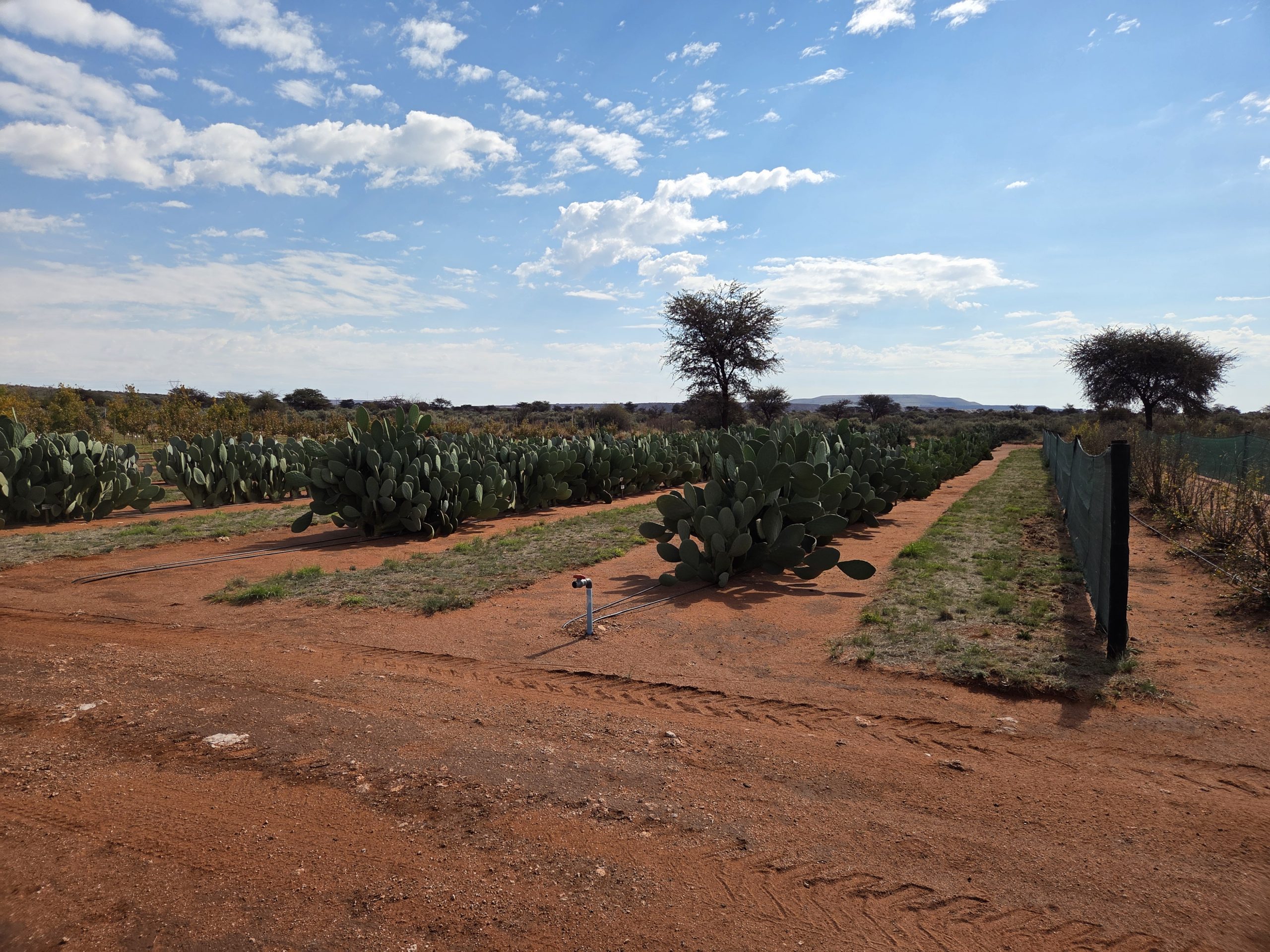
Located of the N8 in the Free State near Bloemfontein, South Africa, Waterkloof Research Center, Nursery and Lighthouse project is a 1000 hectare farm located in a semi-arid region in the Free State of South Africa. OPUS Cactus obtained the property with the vision to create a ‘lighthouse’ project.
What is a Lighthouse Project?
A lighthouse project is a small-scale yet big-picture project. The concept leverages the imagery of a lighthouse as a beacon for future research, innovation and market disruption.
Our Waterkloof Lighthouse Farm is OPUS Cactus’ hub for empirical observation, R&D activities, and fostering a culture of constant, iterative experimentation and a key nursery with over 25 million cladodes (cactus leaves) for scaling into our sustainable projects. It is where we explore how cactus-based bioproducts play a role in addressing the world energy demand, carbon capture, usage and storage, and food insecurity.
Commercial Farm Operations
Waterkloof is the largest commercial opuntia cactus farm in sub-Saharan Africa and has been in operation for over 30 years as an orchard and research hub. We have collected extensive data from over 48 cultivars of opuntia cactus and now have >25 million cladodes available as future source stock or feedstock for production. The farm also hosts a wide array of flora and fauna and serves as home to 8 families who live and work permanently on the farm.
Redefining Opuntia
In many places around the world, opuntia – commonly known as prickly pear cactus, is viewed as a nuisance and in some geographies, even as an invasive species due to its aggressive spines. OPUS Cactus exclusively grows spineless opuntia which is not to be confused with the other spine-bearing opuntia species. We are constantly conducting research trials with various academic institutions as to which varieties yield the most biomass per hectare, are resilient in extreme cold temperatures and are resistant to pests such as cochineal and cactoblastis.
Agronomic research and design undertaken at Waterkloof is centered around demonstrating the potential of spineless opuntia as a viable source of renewable energy, consumable for livestock and humans, cosmetic oil, and other innovative bioproducts under semi-arid to arid conditions. The digestate, a rest stream of biogas production, is used as our organic fertiliser, thus aligning with circular economic and zero waste principles.
“When the well is dry, we know the worth of water”
– Benjamin Franklin